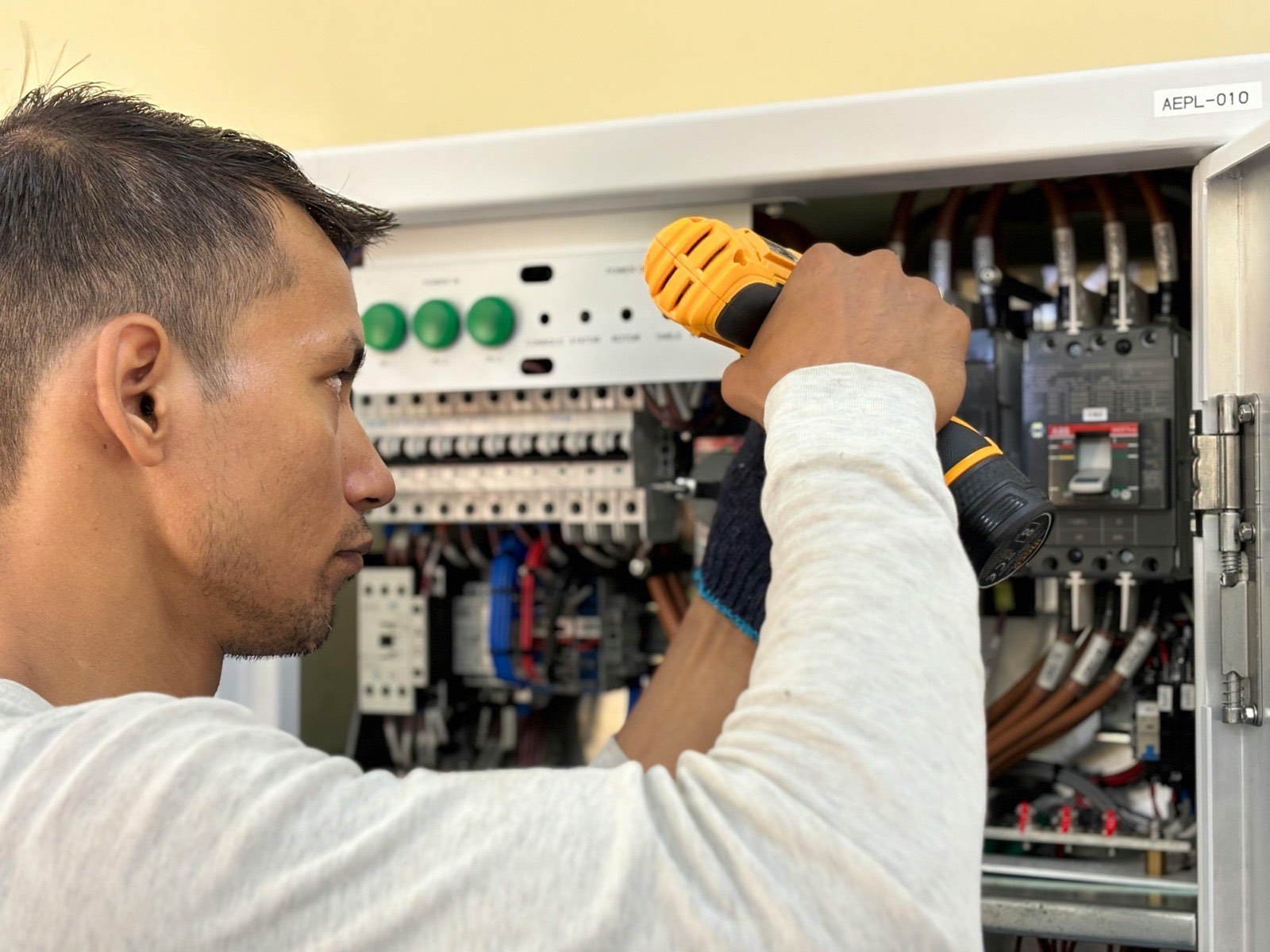
When someone searches for an electrician, they're making a trust decision as much as a commercial one. Electrical work is safety-critical. The person browsing your website is wondering: are you actually qualified, are you insured, and will you leave my home safe when you leave?
Most electrician websites fail at answering these questions quickly enough. Credentials are buried, work areas are vague, and the most common searches — consumer unit replacement, EV charger installation, periodic inspection — don't have their own pages. The sites that handle this properly get disproportionately more calls.
Qualifications and certifications: get them front and centre
NICEIC, NAPIT, or SELECT membership should appear on your homepage, above the fold if possible. Not buried in the footer. Not hidden on an about page. On the first screen a visitor sees.
Why it matters so much: homeowners are often advised by builders or insurance companies to "make sure they're NICEIC registered." When they arrive at your site, they're looking for that confirmation. If they can't find it quickly, they leave.
Also display:
- Part P self-certification status — customers need to know you can sign off domestic electrical work without calling the council
- OZEV approval for EV charger installation, if you have it
- MCS certification if you install solar PV
- Public liability insurance — the amount. "£2 million public liability insurance" is more convincing than "fully insured"
EV charger installation is a growth area. Searches for "EV charger installer [town]" have low competition right now and will keep growing as EV adoption increases. A well-optimised page for this service can rank quickly and generate a new revenue stream.
The pages that rank well for electrical contractors
A single homepage won't rank for specific electrical searches. You need individual pages for each service. These are the ones worth building first:
- Consumer unit / fuse box replacement — searched 5,400 times/month nationally. High-value job, safety-critical, customers research it thoroughly. A detailed page on this ranks well and converts well.
- EV charger installation — growing fast. OZEV grant information makes this page more useful than competitors who just list the service.
- Full house rewire — another high-value, high-research job. Customers want to know what to expect: how long it takes, whether they need to move out, what the disruption looks like.
- Periodic electrical inspection (EICR) — often needed by landlords, home buyers and insurers. Searches are consistent year-round.
- Emergency electrician — fault finding, power outages, tripped circuits. Emergency searches have high intent and relatively low competition for local results.
- Solar PV installation — if MCS certified, this deserves its own page with information about the Smart Export Guarantee and typical payback periods.
Location pages: where most electricians leave money on the table
If you cover six towns but only mention two of them on your homepage, Google doesn't know to rank you for the others. A location page for each area you serve — "electrician in Stockport," "electrician in Macclesfield," "electrician in Wilmslow" — signals to Google that you're the relevant result for searches in those specific places.
These pages don't need to be long. 300–400 words with your services, a mention of recent work in that area, and your contact details is enough. The specificity is what matters.
What the copy should actually say
Electrician website copy fails in a predictable way: it lists certifications and services without connecting them to what the customer is worried about. "NICEIC Approved Contractor offering a full range of domestic and commercial electrical services" is technically accurate but doesn't make anyone feel confident about calling you.
Compare: "Replacing your fuse board? We're NICEIC approved, carry out all work to BS 7671, and provide the certificate you need within 48 hours of completion. Covering [town] and surrounding areas, usually available within the week."
The second version answers the questions a customer is actually asking: are you qualified, will this be done properly, will I get the paperwork, and when can you come?
Photos and project galleries
Electrical work is harder to photograph than a kitchen renovation — but not impossible. Photos of neatly installed consumer units, tidy surface cable runs, newly installed EV chargers, and before/after comparison shots all work well. They prove technical competence and attention to detail, both of which customers are specifically looking for when hiring an electrician.
Landlord certificates: if you offer EICR inspections and landlord electrical safety certificates, make this a separate page. Landlords searching for "EICR certificate [town]" or "landlord electrical inspection [town]" are repeat customers — they need certificates renewed every 5 years for every property.
Speed and mobile performance
Emergency electrical searches — "electrician near me," "no power to house" — are almost all done on a mobile phone, often from a dark room. Your site loads in under 2 seconds or you've already lost that call. Images need to be compressed. Fonts need to load quickly. There's no room for decorative heavy animations on a site designed to convert emergency searches.
The trust summary
For an electrician's website, the conversion hierarchy goes: trust → competence → availability → contact. A visitor who doesn't trust you won't enquire regardless of how slick the site looks. Build trust first — qualifications, insurance, reviews — then demonstrate competence through service pages and photos, then make your availability and contact details obvious.