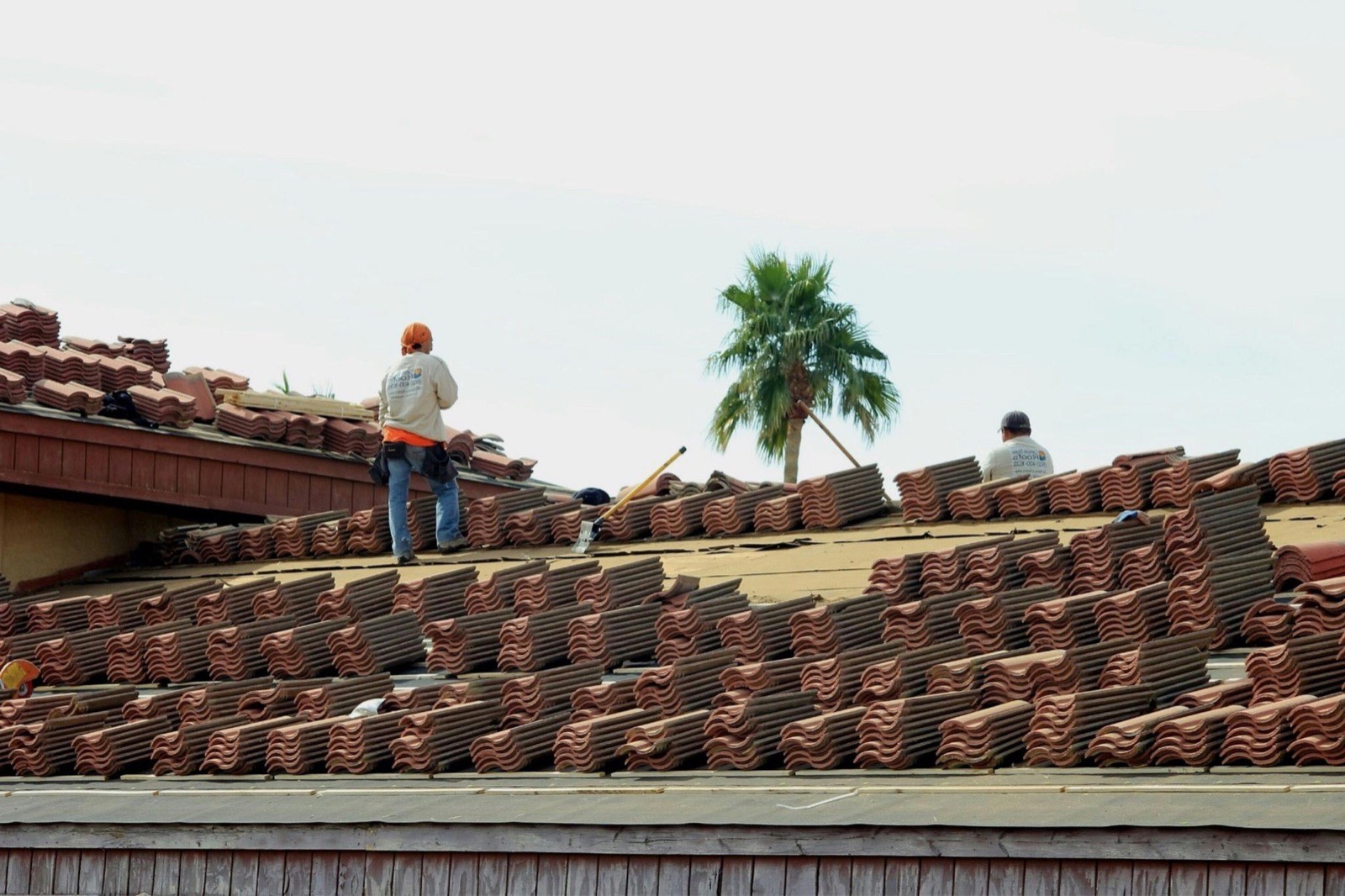
Roofing is one of the few trades where the customer has almost no way to assess quality before committing to the work. They can't see the roof without scaffolding. They can't test a repair. They're making a decision that could cost £3,000 to £20,000 based almost entirely on whether they trust you — and they're forming that trust online, from your website and your reviews, before they ever speak to you.
That context makes the design brief for a roofing website clear: build trust quickly, demonstrate competence visually, and make getting a quote as frictionless as possible.
The roofing website structure that works
The mistake most roofing company websites make is treating the site as a brochure. One page listing every service, a gallery, and a contact form. That structure doesn't rank for anything specific and doesn't answer the questions someone has when they're specifically researching flat roof replacement or chimney repointing.
Build individual pages for each distinct service:
- Pitched roof repairs
- Full roof replacements
- Flat roofs — EPDM, GRP fibreglass, felt
- Emergency roof repairs
- Chimney repairs, repointing and removal
- Guttering, fascias and soffits
- Lead work and flashing
- Velux and skylight installation
Each page targets people who are specifically looking for that service. "Flat roof repair [your town]" is a specific search with a specific page to match it. A homepage that mentions flat roofs in passing won't rank for it.
Photos: the most powerful thing on a roofing website
Before-and-after photos of roofing work convert better than any copy you can write. A customer who can see a run-down, missing-tile roof transformed into a neat, properly finished result has visual proof of your standard — and they'll remember that photo when they're comparing you with two other local roofers.
What to photograph:
- Before the job starts — the problem clearly visible
- Part-way through — shows the extent of the work and your process
- Finished — close-up of the ridge tiles or flashing, wide shot of the completed roof
- Your van on site — signals local presence and professionalism
Phone camera photos are fine. Natural light from a sunny day, taken from ground level or from scaffolding where safe, produces perfectly good results. Take 10–15 photos per job and you'll have a full gallery within a month.
Before-and-after photos on Google Business Profile: upload your best before/after pairs directly to your Google Business Profile as well as your website. Photos on Google listings are displayed in local search results and generate clicks before someone even visits your site.
Trust signals specific to roofing
Roofing has a reputation problem. It's one of the trades most associated with rogue operators and front door cold calling. Every roofing website needs to actively address the trust deficit that some customers bring to the search.
The most effective trust signals for roofing websites:
- NFRC membership — the National Federation of Roofing Contractors is the industry body customers are most likely to have heard of or been told to look for. If you're a member, display it clearly.
- TrustMark registration — government-endorsed quality scheme. Valued by customers who've been warned about rogue traders.
- Years in business — "established 2008" or "18 years covering [area]" signals that you're not going anywhere.
- Local address — a full local address (not just a mobile number) reassures customers that you're genuinely local and traceable.
- Google reviews displayed in full — with dates, so customers can see you're consistently doing good work, not just a few old five-stars.
- Insurance details — specifically public liability insurance with the amount. "£2 million public liability" is more meaningful than "fully insured."
Emergency roofing: a separate opportunity
Storm damage and sudden leaks generate high-intent, immediate searches. "Emergency roofer near me" or "roof repair today [town]" are people who need a response within hours, not days. They're not price-comparing — they're calling the first credible result they find.
An emergency roofing page with a prominently displayed phone number and a clear statement of your typical response time ("available for emergency roof repairs — usually same day or next morning") captures this traffic separately from your planned work pages.
Getting a quote: reduce the friction
Some customers are reluctant to call before they have a rough idea of cost. A simple quote request form — job description, address, and contact details — with a commitment to respond within 24 hours removes the barrier. Many roofing companies also do initial roof inspections, which can be offered as a free service on the website to get the first conversation started.
WhatsApp for photo enquiries: roofing customers often want to send you a photo of the problem before committing to a visit. A WhatsApp link on your website makes this easy and typically gets a higher response rate than a contact form.
What roofing websites should not do
A few things that consistently damage roofing enquiries:
- Cold call language — "we spot potential problems before they become expensive" sounds exactly like a rogue trader's pitch. Avoid anything that reads like unsolicited advice about roofs the customer hasn't asked about.
- No phone number visible on mobile — emergency searches are almost all mobile. If the number isn't the first thing they see, they're calling someone else.
- Generic stock images — a photo of a roofer in a stock image looks different from the real thing in a way customers can instinctively detect. Real photos of your work, even imperfect ones, outperform stock imagery every time.
- No coverage area stated — "serving the local area" tells neither Google nor your customer where you actually work. Name the towns.